- Blogs
- Blog Post
Blog Post
How Real‑Estate Marketing Automation Systems Help Agents Generate More Leads and Close More Deals
Modern real‑estate agents juggle hundreds of micro‑tasks; drafting listing descriptions, responding to leads, scheduling showings and keeping their marketing consistent. It’s no wonder many feel stuck on a hamster wheel: they spend hours on busy work, yet still struggle to build a consistent pipeline. According to a 2025 Veterans United survey, only 9 % of U.S. consumers prefer visiting a branch office, while 55 % use mobile apps as their primary banking channel; a third of prospective buyers already use AI tools in their home‑buying process. Customers expect instant responses and personalized service, but traditional marketing makes that hard.
Manual tasks, inconsistent leads and wasted time
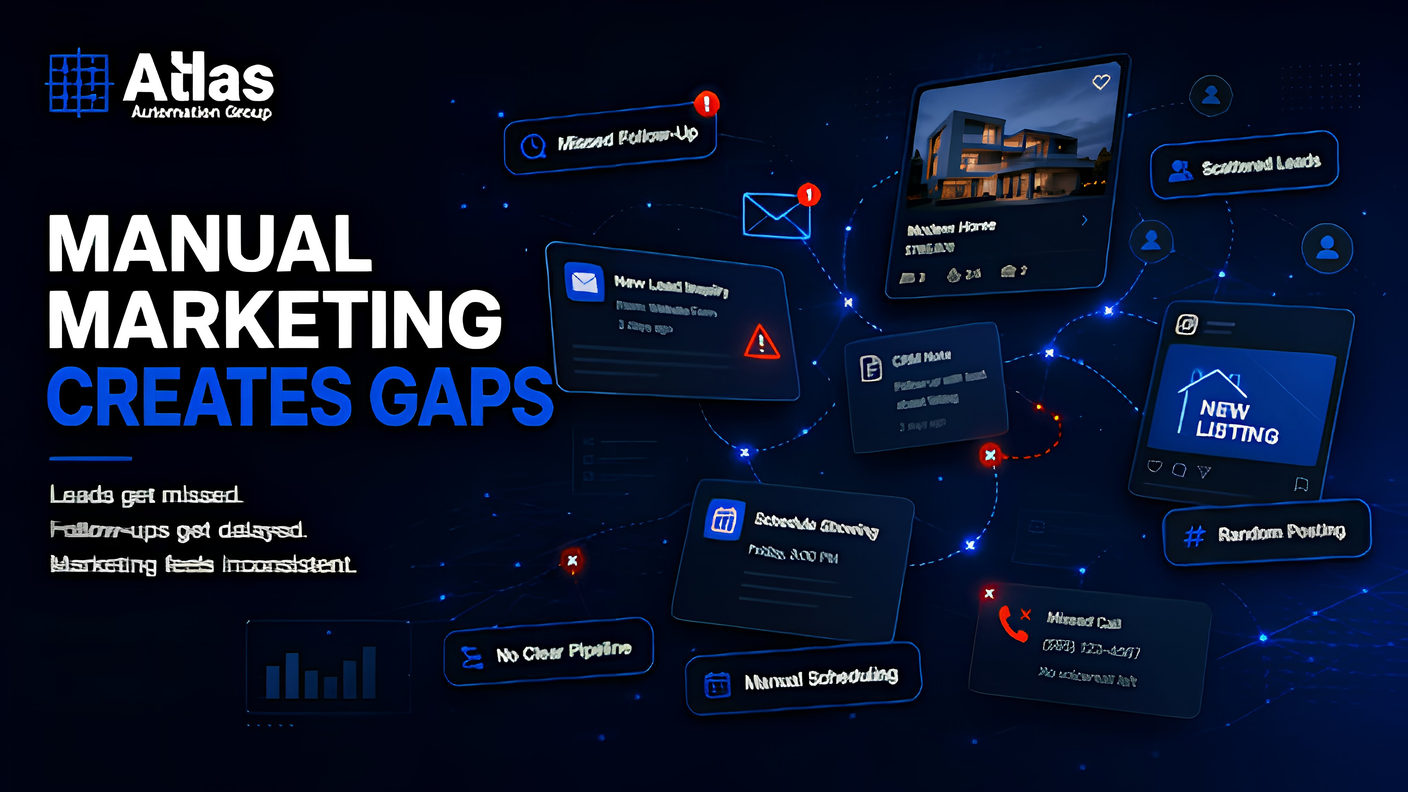
Without automation, most agents rely on cold calls and one‑off posts. Leads slip through the cracks because follow‑up is inconsistent, and marketing feels like guesswork. Even when a prospect is interested, getting the right information or scheduling a showing takes multiple calls and emails. This reactive approach wastes time and makes revenue unpredictable.
Marketing engine working 24/7
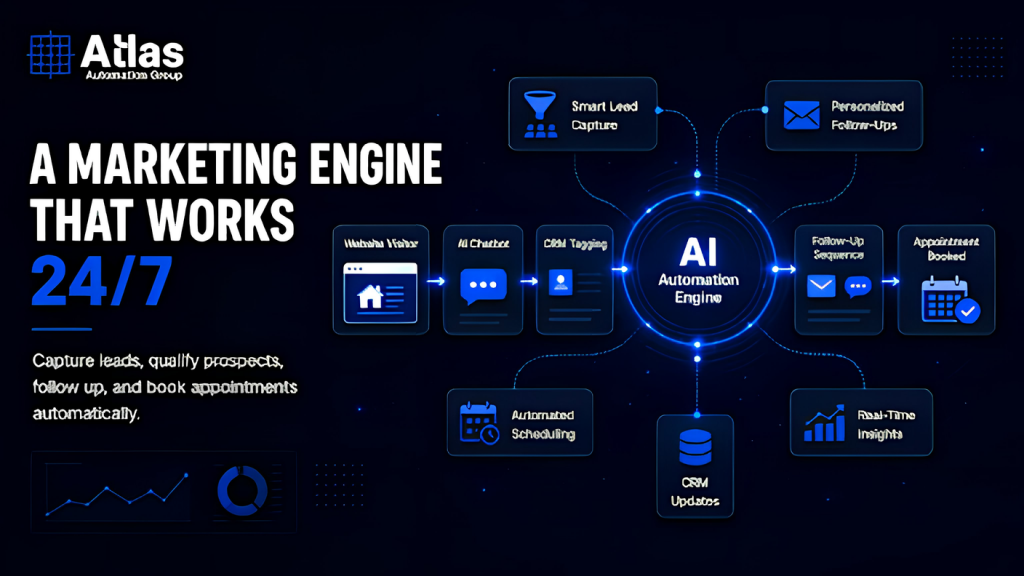
AI‑driven marketing automation changes the game. Recent research on agentic AI shows that these systems can interact with website visitors, capture lead information, respond instantly and even evaluate buyer intent using conversational follow‑up questions. Integrated with your CRM, these assistants book appointments, coordinate showings and send reminders automatically. Here’s what a modern marketing engine looks like:
- Smart lead capture. AI chatbots qualify leads the moment they land on your site, asking the right questions and updating your CRM tags. This ensures every promising prospect receives attention while long‑term leads are nurtured automatically.
- Personalized follow‑ups. Machine‑learning models analyze past sales, neighborhood trends and client behavior to personalize emails, SMS and social campaigns. The result is a hyper‑personalized experience that feels more like a concierge than a campaign.
- Automated scheduling and task management. AI assistants book appointments, create reminders and handle document requests without you lifting a finger. Tools like Rechat can turn a simple voice note (“Follow up with the Thompsons tomorrow”) into a scheduled task or email draft.
- Data‑driven insights. AI‑powered analytics tools provide real‑time market conditions, predict who in your database is likely to move, and even generate automated CMA reports. This helps you set the right price and focus your energy where it counts.
- Scalable marketing. AI marketing platforms help you design flyers, write social posts, repurpose videos and edit listing visuals. Consistency becomes effortless because the system generates assets across channels.
By automating the busy work, you free up hours to meet clients and negotiate deals. That’s how the arrival feels: more appointments, better conversations and a steady stream of qualified prospects.
Why now?
The real‑estate industry is catching up fast. 82% of top agents in a 2025 survey reported using AI in their operations, and clients are increasingly comfortable engaging with AI chat tools. With only 9% of consumers still preferring branch visits, buyers expect real‑time responses and self‑service tools. By adopting marketing automation today, you’re aligning with how modern consumers prefer to shop for homes.
Putting it into action
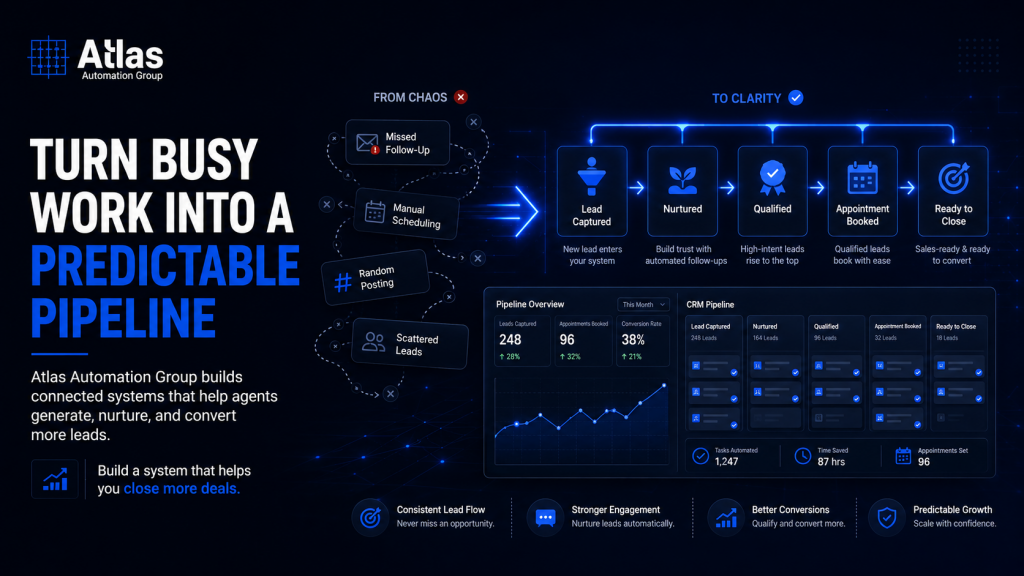
- Centralize your marketing. Integrate your website, CRM and social accounts with an AI‑powered platform so leads, inquiries and follow‑ups are all in one place.
- Deploy a conversational assistant. Use a chatbot to answer FAQs, qualify prospects and route inquiries. It can capture documents and set appointments around the clock.
- Design automated campaigns. Build email and text sequences that nurture prospects based on their behavior; for example, sending tailored listings after they interact with your blog or open a valuation tool.
- Leverage analytics. Use AI‑driven CMA tools and predictive analytics to identify homeowners likely to move. Focus your outreach where it will have the biggest impact.
- Optimize regularly. Monitor engagement rates, refine your messages and adjust your segmentation. AI models improve with feedback, so your pipeline becomes even more predictable over time.
With these systems in place, your marketing becomes a machine that never sleeps. Atlas Automation Group builds these engines for you so that you can focus on what you do best: closing deals and building relationships.