- Blogs
- Blog Post
Blog Post
How AI Automation Helps Real‑Estate Agents Build a Predictable Client Pipeline
Many agents experience feast‑or‑famine cycles: one month is full of showings, the next is eerily quiet. Pipeline inconsistency usually stems from manual processes — leads are not scored, follow‑ups rely on memory and marketing is sporadic. AI automation tackles these pain points by turning scattered tasks into a cohesive system.
The pain: an unpredictable pipeline
Agents often juggle dozens of leads at varying stages. Without a system, it’s hard to know who is serious, who needs nurturing and who is ready to list. Calls and emails can slip through the cracks, causing potential clients to drift elsewhere. On top of that, preparing comparative market analyses (CMAs), marketing materials and contract documents consumes hours that could be spent prospecting or negotiating.
The arrival: a pipeline that runs itself
AI‑enabled platforms integrate CRMs, marketing tools and transaction management, turning your database into a true pipeline. Here’s how:
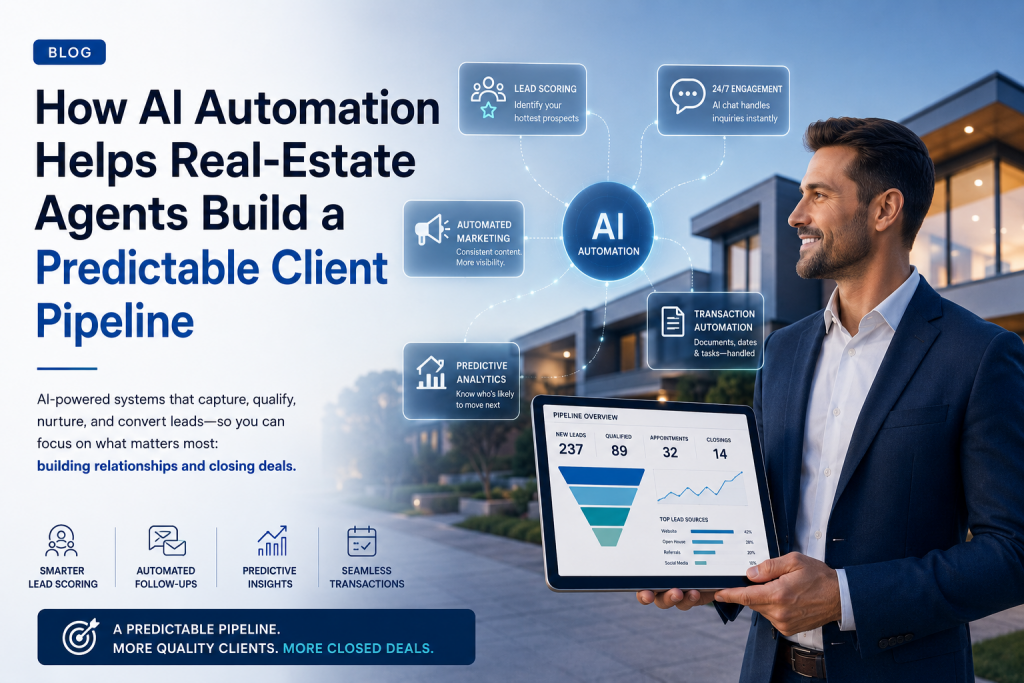
- Lead scoring and follow‑up. AI‑driven CRMs score leads based on engagement and online behavior, automatically triggering follow‑up emails or texts. They log interactions in the background and qualify contacts before you respond. This ensures you focus your energy on the hottest prospects.
- Predictive analytics. Tools like Revaluate and CanaryAI use machine learning to predict who in your sphere is likely to move, offering alerts when a homeowner’s life circumstances indicate they may sell. Combined with automated CMA generators, you can prepare pricing strategies quickly.
- Automated marketing content. AI writing and design tools help you generate listing descriptions, social posts, videos and email sequences at scale. Instead of scrambling for ideas, you maintain consistent branding across channels.
- Voice‑note to action. After a showing, voice‑note your thoughts and let systems like Rechat convert them into organized client notes or follow‑up drafts. This shifts your workflow from reactive to proactive, ensuring nothing is forgotten.
- 24/7 client engagement. AI chat tools handle late‑night inquiries, qualify buyers (“Are you pre‑approved?”) and share listing details while capturing key information. They integrate with QR codes at open houses and web forms, so leads always get an immediate response.
Automated transaction management. AI‑enabled transaction tools read documents, flag missing signatures, suggest next steps and extract key dates, syncing them with your calendar. This reduces errors and ensures on‑time closings.
Why this matters
By stitching together these automations, you create a pipeline that is predictable. As leads come in, they’re scored, nurtured and advanced to appointments automatically. Predictive insights help you target the right people at the right time. Your marketing stays consistent and your administrative tasks are handled in the background. This means more conversations with qualified clients and fewer frantic catch‑ups.
Next steps
- Audit your processes. Identify where leads leak out of your current pipeline (missed follow‑ups, delayed CMA creation, unqualified contacts).
- Choose an integrated platform. Adopt a CRM that combines lead capture, AI scoring, marketing automation and transaction management. Atlas Automation Group specializes in setting up and customizing these systems for real‑estate professionals.
- Implement predictive tools. Layer predictive analytics on top of your database to identify likely movers and sellers, then set automated campaigns to reach them.
- Train the models. Feed your AI systems with feedback — mark which leads converted and which didn’t. Over time, your models become better at predicting readiness and intent.
With AI automation, your pipeline becomes more than a list — it’s a self‑optimizing engine that brings you closer to your revenue goals. Let technology handle the repetition so you can spend your time advising clients and closing deals.